



How to Choose the Right Bumper Front for Global Sourcing?
Choosing the right Bumper Front for global sourcing requires more than comparing supplier prices. The part must fit precisely, protect key vehicle areas, and survive demanding transport conditions. Material choice matters. Polypropylene with EPDM may reduce weight, while reinforced compounds can improve stiffness. However, each option affects tooling, painting, recycling, and final cost.
Dr. Elena Marquez, an automotive plastics and sourcing consultant, advises: “A bumper quote is only useful when its specifications are equally clear.” Her point is practical. Buyers should review CAD data, resin grades, mold ownership, surface finish, production capacity, and quality records. A supplier with modern equipment may still fail if its measurement process is weak. Ask for first samples. Check mounting holes, panel gaps, clips, texture, and color under natural light. Small errors become expensive after shipment.
Global sourcing adds more pressure. Confirm packaging strength before the first container leaves the factory. Corner damage, moisture, and stacking pressure can ruin acceptable parts. Review minimum order quantities, lead times, inspection stages, spare tooling plans, and communication routines. Factory audits can reveal details that brochures hide. Sometimes, the cheapest Bumper Front creates the highest total cost. That lesson is easy to repeat and harder to apply.
A careful decision also needs room for uncertainty. Supplier data may be incomplete. Forecasts may change. Even experienced teams can overlook regional climate or installation differences. Therefore, compare suppliers through samples, documented tests, and realistic landed-cost calculations. The right partner is not simply the lowest bidder. It is the supplier that can deliver consistent fit, traceability, and support across markets.

Define Bumper Front Types, Materials, and Vehicle Compatibility
How to Choose the Right Bumper Front for Global Sourcing?
Define Bumper Front Types, Materials, and Vehicle Compatibility
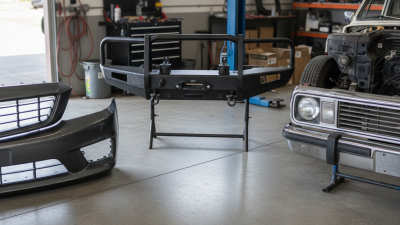
A bumper front may mean a cover, a complete assembly, or a reinforced structural unit. Clarify this term before requesting quotations. A decorative cover commonly uses PP, TPO, or ABS plastic. Reinforcement beams usually require steel or aluminum. Each material affects impact performance, weight, painting, and shipping cost. It also changes the required production equipment.
Vehicle compatibility needs more than a model name. Confirm the production year, body style, engine version, drive position, and regional specification. Check openings for lamps, parking sensors, cameras, grilles, and radar modules. Mounting points must match the vehicle drawing. Even a two-millimeter error can create visible gaps. Request CAD data, dimensional reports, and physical samples before approving a purchase.
Experienced sourcing teams inspect surface waves, edge sharpness, clip strength, and paint adhesion. They also review UV resistance, low-temperature impact, packaging protection, and batch traceability. Ask suppliers about mold revision control and inspection frequency. A perfect-looking sample can still mislead. Production parts may shrink differently after molding. We have seen fit problems caused by packaging pressure, not tooling. That detail is easy to miss. Regional safety and lighting requirements must be checked with qualified local specialists. Supplier certificates help, but they do not replace independent verification.
How to Choose the Right Bumper Front for Global Sourcing? - Define Bumper Front Types, Materials, and Vehicle Compatibility
| Bumper Front Type | Typical Material | Typical Construction and Dimensions | Typical Vehicle Compatibility | Main Advantages | Key Sourcing Risks | Recommended Inspection Points |
|---|---|---|---|---|---|---|
| OEM-Style Bumper Cover | Polypropylene (PP), PP with EPDM rubber, or TPO | Injection-molded outer fascia; common wall thickness is approximately 2.5–4.0 mm; usually supplied unpainted, primed, or painted | Passenger cars, hatchbacks, sedans, crossovers, and light commercial vehicles using a model-specific mounting layout | Lightweight, corrosion-resistant, repairable, and suitable for high-volume replacement programs | Incorrect mounting points, poor surface quality, color mismatch, and missing openings for lamps, grilles, or sensors | Check dimensional scanning, tab strength, grille fit, paint adhesion, surface waviness, and alignment with adjacent panels |
| Steel Reinforcement Bumper | High-strength low-alloy steel or mild steel | Stamped or roll-formed beam; typical sheet thickness is approximately 1.5–3.0 mm; normally installed behind the plastic cover | Passenger vehicles, sport utility vehicles, vans, and light trucks designed with a steel impact beam | High stiffness, established manufacturing processes, and good resistance to low-speed impact loads | Excess weight, corrosion, incorrect crash-load behavior, and incompatibility with the original energy absorbers | Verify steel grade, coating coverage, hole position, beam straightness, weld quality, and conformity with the intended crash structure |
| Aluminum Reinforcement Bumper | Aluminum alloy, commonly heat-treatable 6xxx-series material | Extruded, stamped, or hydroformed beam; typical wall or sheet thickness is approximately 2.0–4.0 mm | Vehicles where low mass, fuel efficiency, or electric-vehicle range is a design priority | Lower weight than steel, good corrosion resistance, and reduced vehicle mass | Galvanic corrosion at dissimilar-metal joints, lower local dent resistance, and higher material cost | Check alloy certificate, hardness, extrusion profile, fastener compatibility, surface treatment, and isolation between aluminum and steel |
| Off-Road Steel Bumper | Powder-coated or e-coated carbon steel | Welded plate and tubular construction; common plate thickness is approximately 3–6 mm, with tube wall thickness commonly around 2–3 mm | Body-on-frame sport utility vehicles, pickups, and utility vehicles with suitable chassis mounting points | High durability, recovery-point integration, winch compatibility, and improved approach-angle options | Excessive weight, reduced crumple-zone performance, poor corrosion protection, and interference with airbags or parking sensors | Inspect weld penetration, recovery-point rating, mounting reinforcement, coating thickness, approach angle, and sensor clearance |
| Composite Bumper Cover | Sheet molding compound (SMC), glass-fiber-reinforced polyester, or other fiber-reinforced thermoset | Compression-molded panel; typical thickness is approximately 2–3 mm; may require inserts for mounting and sensor brackets | Performance vehicles, specialty vehicles, and low-volume applications requiring rigid molded styling | Good dimensional stability, strong surface definition, and suitability for complex shapes | Brittleness in cold conditions, fiber print-through, higher tooling cost, and difficult repair after impact | Check fiber distribution, edge finish, resin curing, mounting insert strength, temperature resistance, and paint compatibility |
| Pedestrian-Safety Bumper System | PP or TPO fascia, expanded polypropylene (EPP) energy absorber, and steel or aluminum reinforcement | Multi-layer assembly with a visible cover, foam absorber, reinforcement beam, brackets, and controlled deformation zones | Modern passenger cars and crossovers designed around pedestrian and low-speed impact requirements | Balanced styling, weight control, impact energy management, and integration with active safety systems | Substituting materials or foam density can change impact performance; missing brackets can affect sensor positioning | Confirm absorber density, beam position, deformation clearance, bracket geometry, and compatibility with the vehicle safety design |
| Sensor-Ready Bumper Front | PP, TPO, or composite fascia with reinforced sensor pockets and molded or bonded brackets | Model-specific openings or hidden mounting zones for ultrasonic sensors, radar modules, cameras, and harness routing | Vehicles equipped with parking assistance, adaptive cruise control, automatic emergency braking, or camera-based systems | Supports advanced driver-assistance system integration without extensive modification during installation | Wrong material thickness, paint buildup, bracket offset, or decorative coatings may reduce sensor accuracy | Measure sensor angle, pocket depth, bracket rigidity, paint thickness, radar-transparent zones, and harness protection |
| Electric-Vehicle Bumper Front | PP or TPO outer cover, lightweight metal reinforcement, EPP absorber, and sealed electrical brackets | Aerodynamically shaped fascia may include a closed grille, charging-air duct, cooling openings, and high-voltage component clearance | Battery-electric passenger cars, crossovers, and light commercial vehicles | Low mass, controlled airflow, reduced drag, and integration with battery and thermal-management packaging | Blocked cooling ducts, inadequate water sealing, electromagnetic interference, and insufficient clearance around electrical systems | Check airflow openings, sealing paths, grounding points, cable clearance, radar compatibility, and thermal-management interfaces |
| Commercial-Vehicle Front Bumper | Steel, aluminum, or reinforced thermoplastic depending on duty cycle | Modular sections with replaceable corners, step areas, tow openings, lamp mounts, and heavy-duty brackets | Vans, buses, medium-duty trucks, and fleet vehicles requiring frequent serviceability | High serviceability, modular replacement, load tolerance, and suitability for fleet operations | Incorrect load rating, poor interchangeability, exposed corrosion, and interference with towing or lighting equipment | Verify mounting load, tow-hook clearance, step strength, lamp alignment, corrosion coating, and replacement-part modularity |
| Universal or Semi-Universal Bumper Front | Steel, aluminum, or thermoplastic with adjustable brackets | Limited vehicle-specific shaping; supplied with slotted brackets or adapter plates and requiring final alignment during installation | Older vehicles, utility builds, custom projects, and applications with non-standard body configurations | Lower tooling investment, broad application range, and flexible installation options | Poor fit, exposed gaps, uncertain crash behavior, drilling requirements, and possible non-compliance with local regulations | Confirm bracket adjustability, vehicle frame dimensions, ground clearance, lamp visibility, load transfer, and installation instructions |
Related Posts
-

How to Choose the Right Front Bumper for Global Buyers?
-

10 Essential Tips for Choosing the Right Car Front Bumper?
-
Top Front Bumper Types for Your Vehicle Explained
-
How to Choose the Right Bumper Front for Your Vehicle?
-

Top 10 Front Bumper Tips for Global Buyers in 2026?
-

Top 10 Car Bumper Styles for Every Vehicle and Their Benefits


