China Top Audi Parts Manufacturers for Global Buyers?

China has become a major sourcing base for automotive components, including replacement Audi Parts. According to the China Association of Automobile Manufacturers, China exported more than 5.8 million vehicles in 2024. This expanding export network supports larger supplier ecosystems, faster logistics, and stronger quality-control capabilities.

For global buyers, the challenge is not finding a factory. It is finding a dependable one. The 2024 Interact Analysis report on automotive supply chains highlights continuing pressure on manufacturers to improve digital traceability, delivery reliability, and production flexibility. These factors matter when sourcing brake components, suspension arms, lighting systems, filters, or electronic modules for Audi applications.

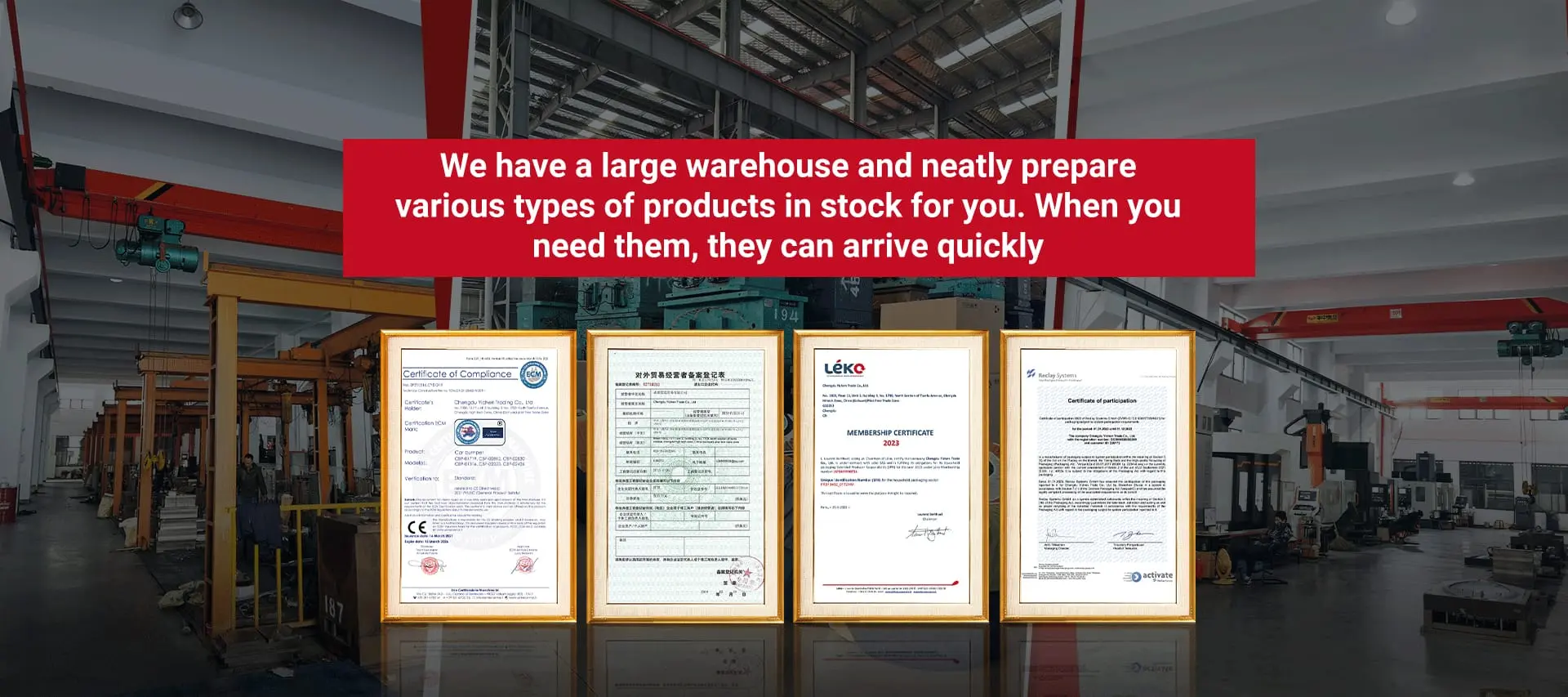
A capable manufacturer should provide clear OE reference numbers, material specifications, batch records, and inspection reports. Certifications such as IATF 16949 and ISO 9001 can indicate structured quality systems, but certificates alone are not enough. Buyers should review sample consistency, packaging details, warranty terms, and independent test results. Small gaps often become expensive problems.

The China Automotive Aftermarket Research Institute has also reported steady growth in China’s replacement-parts market, driven by a growing vehicle population and longer ownership cycles. This creates opportunities for international distributors, repair chains, and private-label brands. However, “factory direct” does not always mean technically superior.

That deserves scrutiny.

This guide examines leading Chinese Audi Parts manufacturers through practical criteria, including engineering experience, production capacity, compliance documentation, export performance, and after-sales support. It focuses on compatible replacement components, not claims of affiliation with Audi AG. Manufacturer information should still be verified before purchase, because product quality can vary between batches, factories, and even product categories.

China Top Audi Parts Manufacturers for Global Buyers?

How to Evaluate Audi Parts Manufacturers in China

Evaluating Chinese manufacturers for premium European vehicle parts requires evidence beyond a polished factory tour. The 2024 China Association of Automobile Manufacturers report recorded 5.86 million vehicle exports, up 19.3% year on year. That scale suggests strong production capacity, but it does not guarantee consistent replacement-part quality. Ask for IATF 16949 certification, process-flow charts, incoming-material records, and recent independent test reports. Check whether each batch carries a traceable code, production date, and inspection result. Small details matter.

Request samples from three production batches, not one carefully selected piece. Measure dimensions, coating thickness, hardness, connector fit, and performance after heat or vibration testing. Compare the results with the original technical specification, not only a visual sample. A capable supplier should explain failure rates, corrective actions, and warranty handling in writing. “Zero defects” claims deserve caution. Real factories record problems.

The 2024 Automotive Industry Action Group quality guidance emphasizes documented control plans, measurement systems, and corrective-action discipline. During a remote audit, ask to see live inspection records and rejected parts. Verify subcontractors for machining, electronics, and surface treatment. I would also test communication speed, because delayed engineering answers can become costly production delays. Price is useful, but it is a weak quality indicator. My own evaluation would leave room for doubt: one successful shipment proves very little.

Major Types of Audi Parts Available from Chinese Suppliers

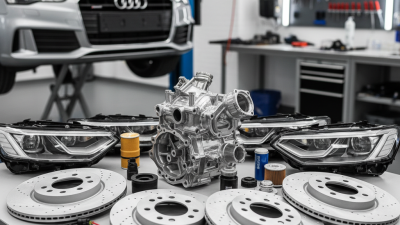
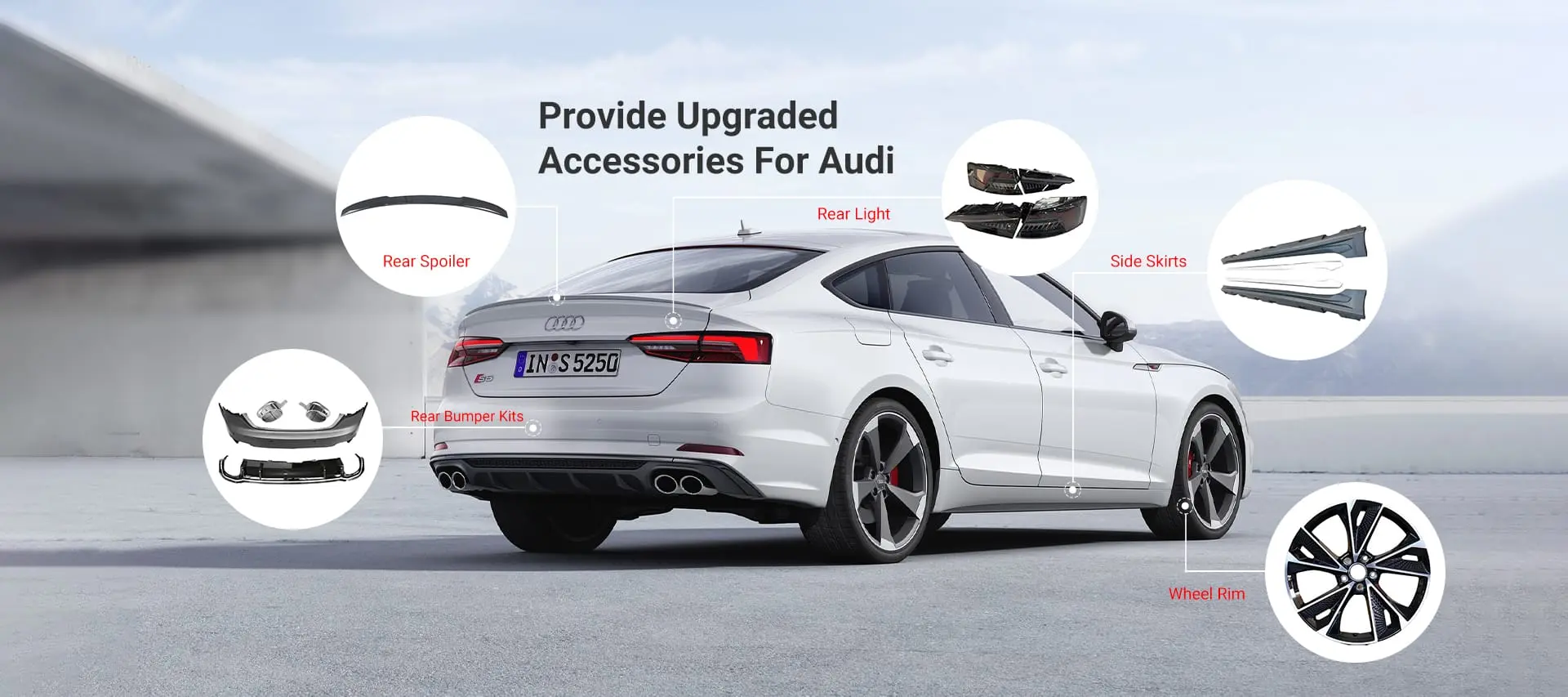
Chinese suppliers offer a broad range of replacement parts for German-platform vehicles, covering both routine service and complex electronic systems. Common categories include brake pads, discs, filters, control arms, wheel bearings, suspension struts, steering components, and engine gaskets. Transmission parts, cooling modules, turbocharger hardware, exhaust components, and fuel-system sensors are also widely available. OICA reported 93.5 million motor vehicles produced worldwide in 2023, creating substantial demand for compatible aftermarket components.

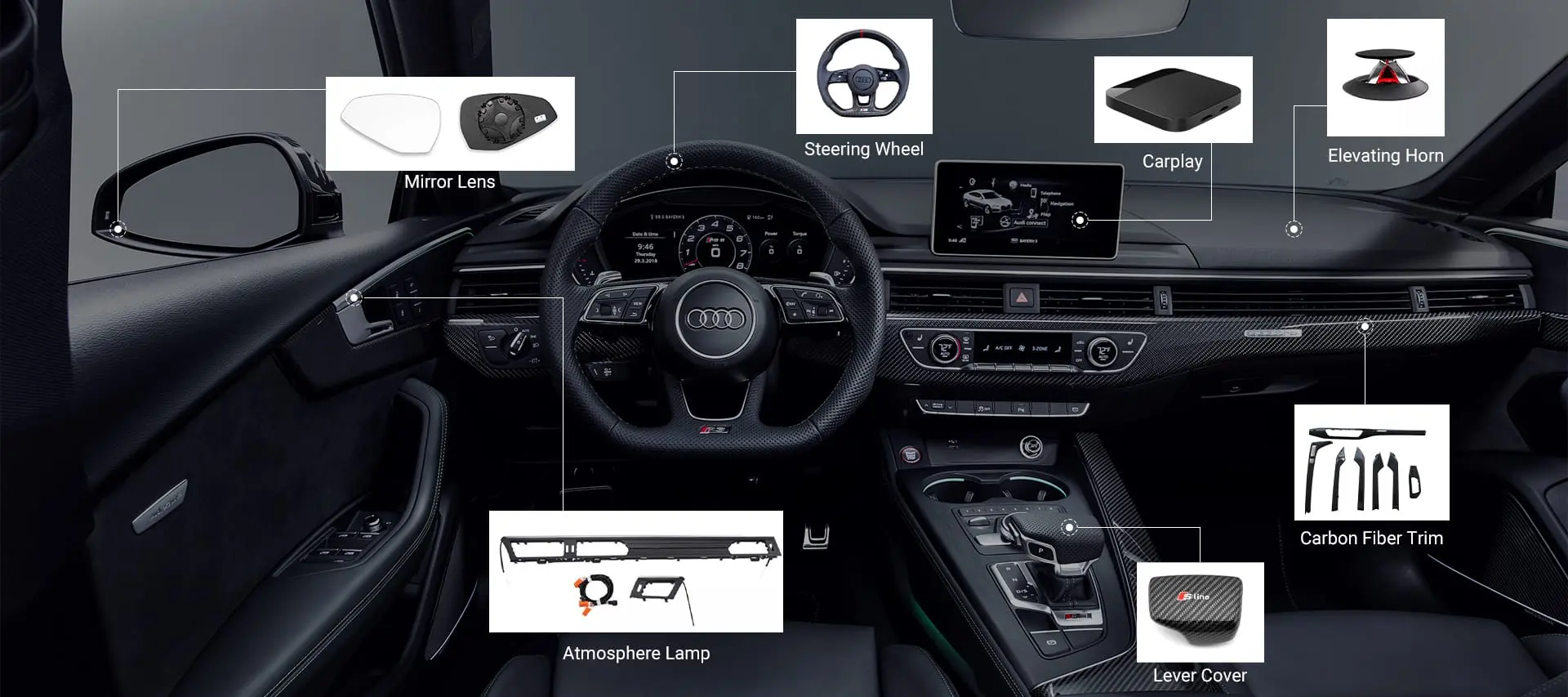
Electrical parts deserve closer attention. Chinese factories produce wiring harnesses, lighting units, parking sensors, electronic control modules, battery-management components, and thermal-control parts for hybrid and electric platforms. The IEA reported more than 14 million electric cars sold globally in 2023, representing about 18% of new-car sales. This shift increases demand for inverters, charging components, high-voltage connectors, and cooling pumps. S&P Global Mobility’s 2024 analysis placed the average U.S. vehicle age near 12.6 years, supporting continued demand for maintenance parts.

In practical sourcing, buyers should request material certificates, dimensional inspection records, and test results before ordering. Sample testing matters more than attractive catalogs. Some suppliers provide excellent machining but weaker rubber compounds. That gap is easy to miss. Check connector fit, sealing quality, surface treatment, and packaging protection. I would also compare batch consistency, because one successful sample does not prove stable production. Reliable suppliers should explain tooling ownership, traceability, and quality-control steps clearly.

Major Audi Parts Categories Available from Chinese Suppliers

The chart shows indicative replacement intervals commonly used in Audi maintenance schedules. Engine oil is typically serviced most frequently, while spark plugs, filters, and timing-related components generally have longer service cycles. Exact intervals vary by model, engine, production year, driving conditions, and market requirements.

Quality Standards and Compatibility for Global Audi Buyers

Global buyers need more than a low price when sourcing Audi-compatible replacement parts. Quality begins with traceable materials, controlled production, and documented inspection. Suppliers following ISO 9001 and IATF 16949 systems should provide batch records, dimensional reports, and test results. These documents matter when a component travels thousands of kilometers before installation.

Compatibility requires practical evidence. Buyers should confirm the vehicle identification number, production year, engine code, connector design, dimensions, and software requirements. A part may fit physically but still fail electronically. The European Automobile Manufacturers’ Association reported that passenger cars in Europe average about 12 years old in its 2024 Vehicles on European Roads report. That aging fleet increases demand for dependable replacement components, but it also creates mixed specifications across model years. Check carefully.

Testing should include temperature cycling, vibration, corrosion resistance, and repeated installation checks. UNECE vehicle regulations provide useful reference points for safety-related performance, while independent laboratory reports add credibility. In my experience, suppliers sometimes rely too heavily on catalog matching. That is risky. A perfect database is unrealistic. Product photos can also hide connector differences or revised housings. Buyers should request sample approval, warranty terms, and clear nonconformity procedures before placing volume orders. Reliable manufacturers explain limitations instead of promising universal compatibility.

OEM, Aftermarket, and Custom Manufacturing Options

Global buyers can source vehicle parts from Chinese manufacturers through OEM, aftermarket, or custom production programs. OEM manufacturing follows approved drawings, material specifications, and controlled quality procedures. It suits buyers needing stable fitment and repeatable performance. Aftermarket production offers broader coverage and flexible packaging. However, buyers should verify compatibility data, model years, and installation details carefully.

Custom manufacturing works better when standard parts do not meet a project’s dimensions or operating conditions. Suppliers may support reverse engineering, prototype sampling, tooling, and small-batch testing. Useful details include alloy grade, rubber hardness, surface treatment, tolerance ranges, and packaging requirements. I have found that clear drawings prevent expensive corrections later. Still, a perfect brief rarely exists. Early samples can expose missing information.

Tips: Request material reports, inspection records, and sample measurements before placing a large order. Check whether the supplier can provide traceability from raw material to shipment. Confirm testing methods and destination-market requirements in writing. Use independent inspection when the part affects safety or critical vehicle functions. Do not rely only on catalog photographs; they can hide connector differences, weak finishes, or inaccurate dimensions. A small pilot order is often wiser than a rushed full production run.

Export Services, Pricing, and Supplier Verification Criteria

China Top Audi Parts Manufacturers for Global Buyers?

Export Services, Pricing, and Supplier Verification Criteria

Experienced buyers know that export service often matters as much as part quality. A reliable manufacturer should provide clear quotations, export packing, inspection photos, and traceable shipping documents. Confirm whether the supplier manages customs paperwork or uses an external freight agent. Ask about delivery terms, production lead times, warranty handling, and communication after payment. Small details matter. A missing carton label can delay warehouse receiving.

Pricing requires more than comparing unit costs. Request a detailed quotation showing material grade, tooling charges, packaging, inspection fees, and shipping assumptions. Very low prices may hide thinner materials, weaker testing, or inconsistent batches. In my experience, a slightly higher price can reduce replacement costs. Still, buyers should challenge unclear fees and request a sample before approving volume production. No quotation is perfect.

Tips: Verify the business registration, factory address, export history, quality certificates, and customer references. Match the company name across invoices, bank details, and contracts. Arrange a video factory tour or an independent inspection when possible. Check fitment data using measurements, drawings, and sample comparisons. Do not rely only on polished product photos. Some suppliers communicate well during inquiries but respond slowly after an order. That is a warning worth recording. Keep written agreements for specifications, tolerance ranges, packaging, payment stages, and remedies for defects.

China Top Audi Parts Manufacturers for Global Buyers? - Export Services, Pricing, and Supplier Verification Criteria
Supplier Category Common Product Scope Typical MOQ Indicative Export Price Position Typical Production Lead Time Export Services to Request Verification Criteria
OE-quality replacement manufacturer Engine, braking, suspension, steering, electrical and cooling-system replacement parts Usually 10–50 pieces per part number; lower quantities may be available for stocked items Generally higher than basic aftermarket products because of tighter material, testing and dimensional controls Approximately 30–60 days for made-to-order production Pre-shipment inspection, product labeling, export cartons, commercial invoice, packing list and certificate of origin when required ISO 9001 certificate, production audit, inspection records, material certificates and sample approval
Aftermarket replacement supplier Filters, brake components, suspension parts, engine sensors, gaskets and maintenance items Commonly 20–100 pieces per part number Usually competitive for volume orders; final pricing depends on material, testing and packaging requirements Approximately 20–45 days; stocked products may ship sooner Mixed-SKU consolidation, neutral packaging, barcode labels, carton customization and container loading support Sample comparison with approved reference parts, batch traceability, inspection photos and documented warranty terms
Precision machining supplier Aluminum and steel housings, brackets, shafts, suspension hardware and custom mechanical parts Often 50–200 pieces for custom production; prototype quantities may be negotiated Moderate to high, depending on alloy, machining tolerances, surface treatment and tooling Approximately 25–50 days after drawing and sample approval Engineering drawing review, prototype production, dimensional reports, surface-treatment coordination and export packaging CMM measurement report, material grade verification, process capability records and approved production samples
Rubber and polymer parts manufacturer Seals, hoses, bushings, mounts, protective boots and vibration-control components Commonly 100–500 pieces per part number, depending on tooling and compound Competitive for high-volume orders; tooling charges may apply to new designs Approximately 30–60 days, including mold preparation when necessary Compound specification review, mold management, aging-test documentation, private-label packaging and batch coding Rubber or polymer compound data, hardness testing, tensile testing, heat-aging results and dimensional inspection
Electronic component supplier Sensors, switches, ignition-related components, control modules and wiring-related parts Usually 20–100 pieces per item; custom electronic assemblies may require higher MOQs Varies significantly according to semiconductor content, circuit complexity and testing requirements Approximately 30–75 days for custom or assembled products Functional testing, anti-static packaging, serial-number control, technical datasheets and replacement support Electrical test reports, component traceability, firmware or specification control and sample endurance testing
Packaging and private-label service provider Retail boxes, labels, instruction sheets and coordinated packaging for multiple part categories Often 300–1,000 sets for customized packaging; neutral packaging may require less Packaging cost is normally added separately from the product price Approximately 10–30 days after artwork approval Artwork proofing, barcode generation, carton-strength testing, palletization and mixed-container consolidation Packaging sample approval, barcode verification, print-color confirmation and carton drop-test records
Trading and sourcing service provider Multi-category replacement parts sourced from several factories under one purchase order Flexible; often suitable for trial orders and mixed part numbers May include a sourcing or consolidation margin in addition to factory pricing Approximately 35–75 days, depending on the slowest item Supplier matching, order consolidation, inspection coordination, export documentation and freight-forwarder liaison Business license, factory disclosure, purchase-order transparency, independent inspection and clear warranty responsibility
Vehicle-application data specialist Parts supported by catalog data, vehicle-fitment information and cross-reference management Usually 20–100 pieces per part number, depending on stock and customization Price may be higher when catalog maintenance, testing and application data are included Approximately 20–50 days for stocked or standard items Fitment-list review, catalog file preparation, barcode mapping, technical support and product-update notices Vehicle-application validation, reference-part comparison, catalog accuracy checks and documented change control
Verification Area Documents or Evidence to Request Recommended Buyer Check Risk Indicator
Legal identity and factory status Business registration, company address, export authorization and factory photographs or video Confirm that the contracting entity, bank account and invoice entity are consistent Unrelated payment account, unverifiable address or refusal to identify the manufacturing location
Quality management Current quality certificate, inspection procedures, corrective-action records and batch traceability method Check certificate validity and verify whether its scope covers the relevant product category Expired certificates, generic documents or claims that cannot be supported by inspection records
Product conformity Technical drawings, material specifications, test reports, samples and approved reference standards Compare samples against dimensions, materials, finish, packaging and functional requirements Samples are unavailable, specifications change without notice or reports lack batch information
Export capability Previous shipping references, packing specifications, export documents and proposed Incoterms Confirm whether the quotation is based on EXW, FOB, CIF or another agreed delivery term Unclear freight responsibility, incomplete export documents or unexpected destination charges
Commercial terms Formal quotation, payment schedule, warranty policy, tooling terms and replacement procedure Obtain written confirmation of price validity, lead time, tolerance, claims period and remedy Full advance payment pressure, undefined warranty terms or frequent unexplained price changes
Independent inspection Pre-production, during-production or pre-shipment inspection plan Use an independent inspection service for the first order or high-value shipment Supplier rejects third-party inspection or restricts access to production and packing areas
After-sales support Written warranty period, complaint-response procedure, replacement policy and technical contact Test the supplier with a small trial order before committing to regular container volumes No named support process, slow responses or refusal to handle verified defects